
2026-09-21 · 4 min read
Tyre Rotation Guide Malaysia — When & How
Tyre rotation helps your four tyres wear evenly, extending the life of the full set. Here's how to rotate correctly, recommended intervals, and which cars need special attention.
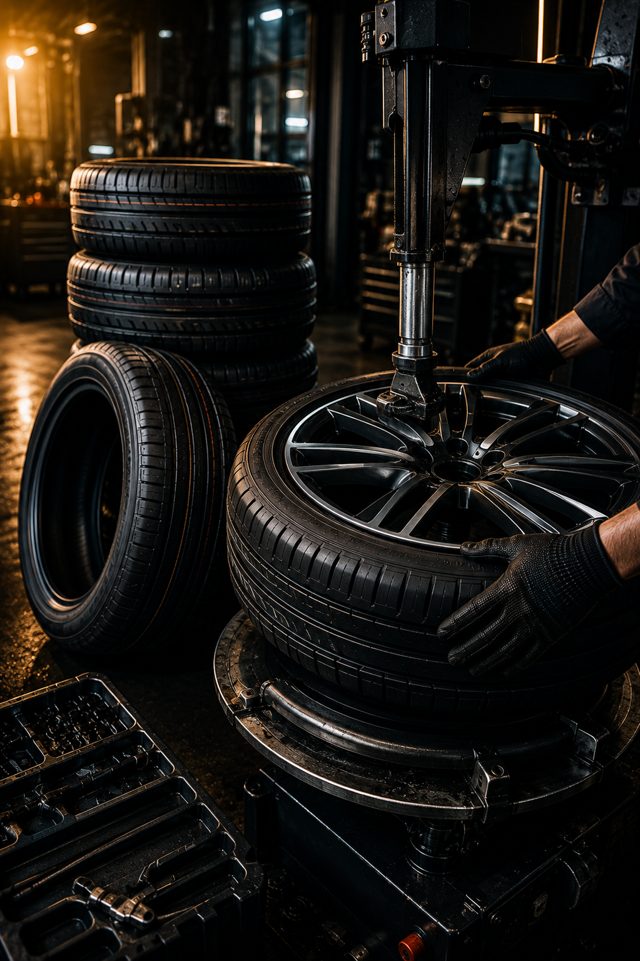
What is tyre rotation?
Tyre rotation means moving your four tyres to different positions — front to rear, left to right, or cross-swapping — so that wear is distributed more evenly across all four. The goal is to make the whole set reach the end of its life at around the same time, instead of the fronts wearing out first while the rears still have plenty of tread left.
Front-wheel-drive (FWD) cars put the front tyres under the load of acceleration, steering and most of the braking — they wear 30–40% faster than the rears. Without rotation, the fronts wear out first and you end up replacing only two tyres, which actually works out more expensive than replacing all four together.
Rotation patterns
Front-wheel drive (FWD): fronts move straight back to the rear same side; rears cross to the front (e.g. right rear moves to left front).
Rear-wheel drive (RWD): rears move straight forward to the same side; fronts cross to the rear.
4WD / AWD: all four tyres are cross-swapped in an X pattern.
Note: directional tyres (with an arrow on the sidewall indicating the rotation direction) can only be swapped front-to-rear — not left-to-right, as reversing the direction affects drainage performance. A spare tyre of a different spec is not included in the rotation.
How often should you rotate?
The general recommendation is every 10,000–15,000 KM, or with each oil change. Malaysia's roads are variable in quality, with some sections more potholed than others — you can shorten the interval to every 8,000 KM.
If you notice that one tyre is wearing significantly faster than the others, check for wheel alignment issues or under-inflated tyres as soon as possible.
Do you need alignment after a rotation?
Rotation itself does not require alignment. However, if uneven wear is spotted during the rotation — heavy wear on the inside or outside edge — that is usually a sign of an alignment problem, and it is worth getting the alignment checked at the same time.
At 4M Car Care, when we rotate your tyres we also check the wear pattern. If anything looks off, we will tell you whether alignment is needed — free check, honest quote before any work.